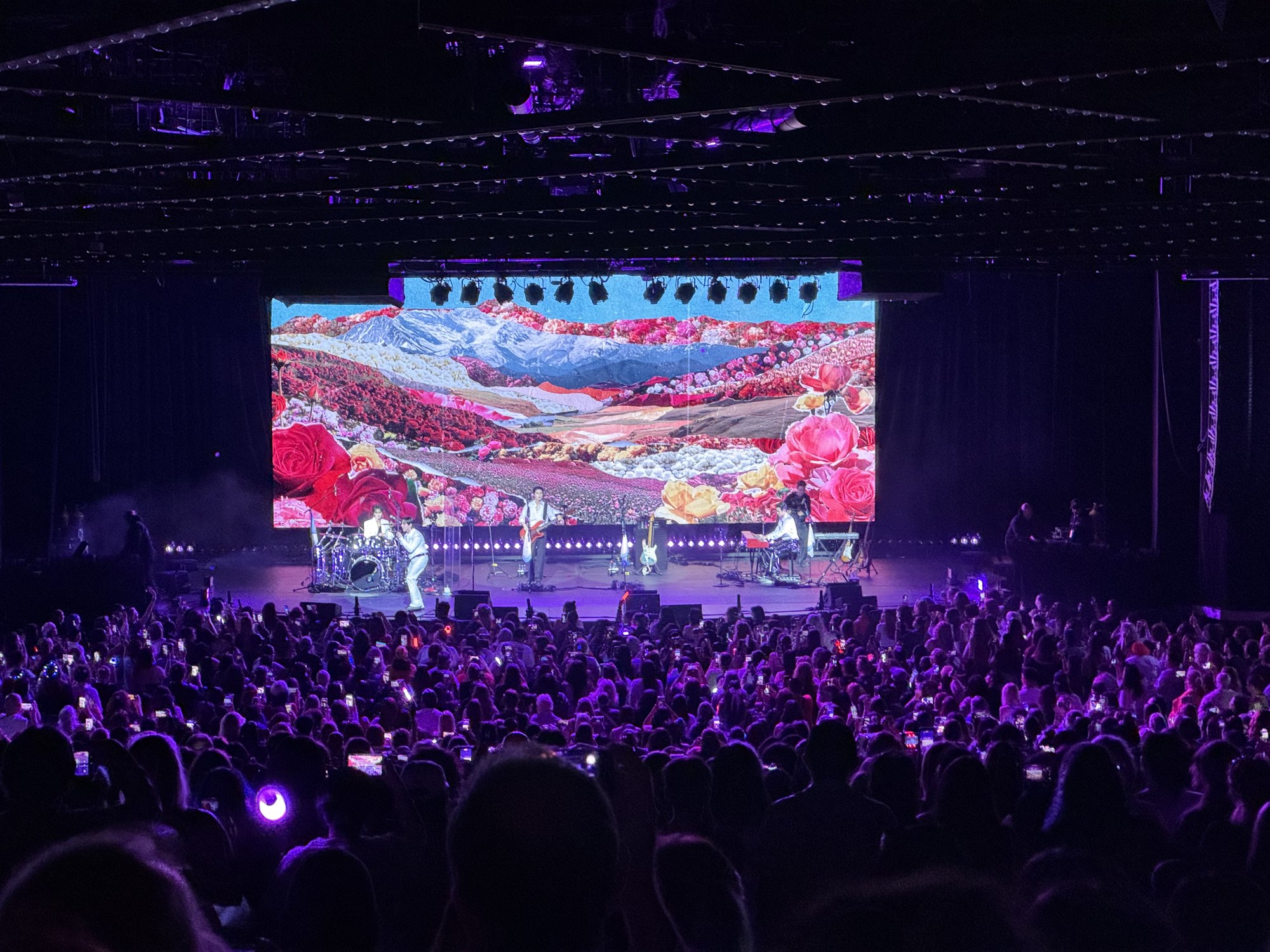
The K-pop field guide from the novel A Star Keeps Its Distance — written for a newcomer named Amaya, and reproduced here in full for anyone who wants the memo too.
A note before you start:
This guide is not exhaustive. It is the guide I wish someone had handed me before my first MYNX concert, when I stood in the crowd holding a light stick, I didn’t know how to operate and feeling like everyone around me had received a memo I hadn’t. Now you have the memo. Everything is illustrated with MYNX because they are your group now, whether you’ve admitted it yet or not.
PART ONE: THE FANDOM
Fandom — The collective community of fans around a group or artist. Not a passive audience — an active, organized community with its own language, culture, and internal economy. In K-pop, fandoms have official names, official colors, and light sticks designed specifically for them.
MYNX’s fandom is called MYNE — as in MYNX is MYNE. Eight million people, forty-three countries. The name is not a coincidence: it’s possessive on purpose, which is worth thinking about.
Stan — Both verb and noun. To stan is to be an active, dedicated fan. There is a spectrum. A casual enjoys the music. A fan follows the group with some attention. A stan is organized about it. A hardcore stan has a bias, a light stick, a photo card collection, and opinions about streaming strategy.
Naila: You are currently somewhere between casual and fan. Give it two weeks.
Casual — Someone who enjoys a group’s music without deep fandom investment. Not a pejorative. Most people enter as casuals.
Naila: You told me K-pop was ‘for kids’ three weeks ago. You are a casual. A very opinionated one.
Ult (ultimate bias) — Your favorite artist across all of K-pop, not just within one group.
Naila: You don’t have an ult yet. You think you don’t have a bias yet either. You are wrong about the second one.
What is a bias in K-pop?
Bias — Your favorite member within a specific group. Not a judgment — just an acknowledgment that you have one. Every fan has one, even the ones who claim they love all members equally.
MYNX has five members: Jiwon (leader), Hyunsik, Junho, Seonil (maknae), and Noah. Your bias is the one you find yourself watching in every group video, whose fancams you seek out, whose solo content you’d consume even if you stopped following the group.
Bias Wrecker — A member who is not your bias but keeps threatening to become it. The one who does something in a performance or interview that makes you briefly forget your bias exists.
Ship / OTP — To ‘ship’ two people is to want them in a relationship, romantic or otherwise. OTP stands for ‘one true pairing.’ Most ships are affectionate and understood to be fantasy.
Naila: The members are real people. The better corners of fandom remember this.
What is a parasocial relationship?
Parasocial relationship — A one-sided connection a fan feels with an artist who does not know they exist. You know their preferences, their habits, their history. They do not know your name. This is not pathological. It is a feature of how human beings respond to sustained attention to another person — or to a carefully constructed version of another person.
Naila: The K-pop industry is built on this. Intentionally. Understanding the mechanism doesn’t dissolve the feeling, but it does let you hold both at once. Don’t skip this concept. It’s the most important one in here.
Sasaeng — A category of obsessive fan whose behavior crosses into invasion of privacy. Not a term of affection. Named for the Korean word for private life. Universally condemned within responsible fandom spaces.
Naila: I’m including this because you need to understand that the fandom is aware of its own worst elements and actively distinguishes them. Most fans are not this. This is important to know.
PART TWO: GROUP STRUCTURE & MEMBER ROLES
Idol — A K-pop artist who has trained with and debuted under a label. Idols are not just musicians — they are cultivated public personas, trained in performance, presentation, and fan engagement as a complete package. The gap between idol and person is real, managed, and the subject of significant fandom analysis.
Debut — A group’s official first release and public introduction. Groups train for years before it.
MYNX debuted in 2019. The oldest member, Jiwon, was nineteen. Seonil, the youngest, was sixteen.
Leader — The designated head of the group, responsible for representing the group publicly and managing group dynamics internally.
Jiwon is MYNX’s leader. His leadership style — visible, consistent, bearing the weight of it so the others don’t have to — is one of the things the fandom tracks closely.
Maknae — The youngest member of a group. Korean cultural context gives this role specific meaning: typically indulged, teased, and protected by older members.
Seonil is the MYNX maknae. He is also the visual and the main dancer. The combination is its own thing to watch.
Visual — The member designated as the group’s most conventionally attractive by Korean beauty standards, who often serves as the face of the group in promotional material. An explicitly aesthetic role, separate from performance roles.
Naila: The visual designation is the industry being blunt about something the rest of the entertainment world does more quietly. It is not a slight to the other members. It is a specific job.
Main Vocalist / Lead Vocalist — Performance hierarchy within a group. The main vocalist carries the most vocally demanding lines, including key changes, runs, and the climactic moments in a song.
Noah is MYNX’s main vocalist. This is why the Osaka fancam tracks him: his lines are the ones the cameras find when a song has to carry.
Member roles — MYNX:
- Jiwon — leader, vocalist
- Hyunsik — vocalist (the group’s observer — fandom recognized)
- Junho — guitarist, vocalist, dry comedic presence
- Seonil — main dancer, visual, maknae
- Noah — main vocalist, international face of the group
PART THREE: MUSIC, RELEASES & THE INDUSTRY
What is a comeback?
Comeback — Any new release following a group’s debut. A comeback typically includes a new album or EP, a title track, a music video, promotional schedules on music shows, and coordinated fandom response.
Naila: ‘In their feels after a comeback’ means the new music hit emotionally and the fandom is processing it collectively, usually on Twitter and in the forums, usually at 3am.
Title Track — The lead single from a comeback — the song promoted most heavily on music shows. The title track may not be the best song on the album. This is a significant ongoing fandom debate.
B-side — Any non-title track on an album. B-sides often contain the music fans consider the group’s most interesting or personal work.
Naila: Every fandom has the argument about whether the title track or a specific B-side should have been promoted. For MYNX, ask about their 2022 album’s third track and watch what happens in the replies.
Music Show — Korean television programs where idol groups perform during comeback cycles. Major shows include Inkigayo, M Countdown, and Music Bank. Music shows run weekly charts and award trophies based on streaming numbers, physical sales, and audience voting.
Streaming — The organized act of playing a group’s music and videos to improve chart performance. Fandoms develop streaming guides with instructions on when and how to stream for chart eligibility.
Naila: Yes, it is coordinated. No, this is not considered cheating. It is considered support.
Hiatus — A period when a group is not releasing music or promoting actively.
MYNX is currently on hiatus for military enlistment. Four of the five members are Korean citizens subject to mandatory military service. The hiatus is intentional and collectively decided. Noah, holding a different passport, is not enlisting. This context is everything when you read the internet’s commentary about it.
Enlistment / Military Service — South Korean law requires male citizens to serve in the military for approximately 18–21 months. For K-pop groups, enlistment is a career reality, extensively covered by fandoms.
PART FOUR: ALBUMS, MERCHANDISE & COLLECTIBLES
Physical Album — In K-pop, an album purchase typically includes a CD, a photobook, and a selection of inclusions. Albums are often released in multiple versions with different covers and content, which drives multiple purchases.
Naila: You will think this is excessive until you receive your first one in the mail and spend forty minutes going through the packaging. Then you will understand.
Photobook — A high-quality printed photo book included with many K-pop album packages, photographed specifically for the album era. Frequently the reason fans buy physical albums even if they stream digitally.
The MYNX Requiem era photobook is particularly referenced in the fandom, both for the photography and for whatever Seonil was doing on pages 47 through 52.
Photocard — A small, high-quality trading card featuring a single member, included randomly in album packages. Their random inclusion leads to trading economies within fandoms. A rare photocard from a limited edition or out-of-print album can sell for significant amounts.
Naila: Photocard trading is a genuine community activity. If you get a card of someone who isn’t your bias, you can trade. This is encouraged.
Pre-Order Benefit (POB) — Exclusive merchandise included only with albums purchased through specific retailers during the pre-order window.
MYNX’s most recent comeback had six POB photocards across six different retailers. The Junho guitar-pose card from the Seoul Music store became briefly difficult to find.
Album Inclusions — What comes inside a physical album beyond the CD: a photobook, a random photocard, a folded poster, a lyric booklet, and a unit or group card. Premium editions may include additional items.
Naila: Unboxing videos — fans filming themselves opening albums in real time — are a genuine genre. The packaging is genuinely considered and the moment of finding your photocard is understood as a small event worth sharing.
Fan-made Merchandise — Unofficial goods produced by fans: fan-designed photocards, prints, pins, tote bags, and slogan banners. Fan markets outside concert venues are worth arriving early for.
Naila: Cash only, usually. The quality varies from very good to exceptional.
PART FIVE: CONCERTS, LIGHT STICKS & CONCERT CULTURE
What is a light stick, and do I need one?
Light stick — An official, group-branded light stick sold by the label. Not a generic glow stick — custom-designed, specific to a group’s aesthetic, Bluetooth-enabled. In arenas, light sticks sync to the music through an app, turning the audience into a coordinated light display. Bringing a different group’s light stick to a concert is considered poor form.
MYNX’s official light stick, the Orbit, is a translucent orb on a matte handle, designed to reference a planet in orbit. It syncs via the MYNE app during concerts. The official color is deep indigo, and the effect of twenty thousand of them lit simultaneously is something you do not forget.
Naila: Buy it before the concert. Venue merch lines are long and you will miss the opening.
What is a fan chant?
Fan Chant / Fanchant — Coordinated fan vocalizations during a song, typically calling each member’s name in sequence during instrumental breaks. Specific to each song and group, memorized by the fandom, performed collectively. Not improvised. Fandom sites publish chant guides before tours.
Naila: Learn the chants. Not because you have to, but because the moment you do it alongside twenty thousand people for the first time, you will understand why it matters. It is a shared language. You will feel it.
Concert Outfit — Many fans dress to the group’s current era colors or aesthetic. There is no dress code, but there is a culture.
Practical notes: wear comfortable shoes, you will stand for three hours or more; layers, arenas are cold during setup and warm when full; a small bag so your hands are free for the light stick; charge your phone fully; bring water.
MYNE’s deep indigo is the concert color. Wearing it signals you as part of the fandom. Strangers will offer to trade photocards, check that you know the chants, share where the better merch is. The outfit is a membership card.
Venue Merchandise — Official goods sold at the concert venue, tour-specific and not available otherwise: tour hoodies, t-shirts, tote bags, a tour program, keychains, and concert-specific photocards. Lines open hours before the concert and items sell out.
Naila: Arrive early. The tour photobook is almost always worth buying. The hoodie will be expensive and you will wear it for a decade.
Slogan / Banner — A printed banner bearing a group slogan, member name, or fandom message. Fans hold these during concerts, particularly during slower songs or solo sections.
Fancam — A fan-filmed video focused on a single member for the duration of a performance, capturing what the official camera misses. Well-filmed fancams from iconic performances become reference points within fandoms.
Naila: If you want to understand an individual member, start with fancams. They show you the person performing when they have slightly forgotten the camera exists.
PART SIX: CONCERT ETIQUETTE
- Learn the fan chants before you go. You do not have to perform them at full volume. You have to know them.
- Hold your light stick up toward the stage. Not in front of the face of the person behind you.
- Do not use flash photography. Flash is disorienting to performers and inconsiderate to the people around you. Turn it off before the show starts.
- Sing along if you want to, but know when not to. During ballads and slower songs, fans often hold up light sticks and create space for the performance rather than singing over it. Read the room.
- Respect the space of the people around you. K-pop concert culture is generally warm and community-oriented. Match that energy.
- Do not leave during the setlist. Groups often have multiple encore segments. The encore chants are part of the concert’s structure, not an afterthought.
- If someone around you is overwhelmed, check in. The music, the light sticks, the fan chants, the proximity — people sometimes need a moment. Be a decent person.
- Filming is acceptable but do not watch the whole concert through your phone screen. Be present. You will not regret it.
PART SEVEN: PLATFORMS & DIGITAL LIFE
Weverse — A fan community platform where groups post directly to fans: text, photos, video, live broadcasts. Functions as a curated social network for the fandom.
Naila: Think of it as the official fan forum. What members post there is intentional. Read it as such.
Bubble / Paid Fan Message Services — Subscription services through which fans pay a monthly fee to receive simulated personal messages from their favorite idols, formatted to feel intimate but not personalized to individual fans.
Naila: This is the parasocial relationship made explicit and monetized. Worth understanding what it is doing before subscribing. That said: many fans find genuine comfort in it, and understanding why is the more interesting question.
Echo / Fan Live — Live broadcast platforms where idols broadcast directly to fans in real time — eating, talking, rehearsing, or simply sitting in a room. Deliberately informal and intimate.
Naila: These are the broadcasts where members are most likely to be unguarded. Watch a few before you form strong opinions about who any of them actually are.
Fandom Name & Official Color — Each K-pop group has an official fandom name and an official color used in concert settings and merchandise.
MYNE — MYNX’s fandom name. MYNE, as in: MYNX is MYNE. Official color: deep indigo.
Fan Edit — Fan-produced video or photo compilations — recut performances, aesthetic edits, short video essays set to music. A primary form of creative expression within fandom and a significant way new fans first encounter groups.
Naila: The first MYNX thing you watched was a fan-compiled edit. Someone spent forty hours on it. This is relevant information about the level of dedication in this community.
A final note:
None of this replaces watching the music. Read the guide, learn the chants, buy the light stick. And then watch the Osaka fancam. Watch the 2022 Inkigayo performance where Noah’s mic cuts out for four bars and he keeps going without flinching and Jiwon covers without breaking eye contact with the audience.
You will understand more from thirty minutes of watching than from thirty pages of reading. The guide just makes sure you know what you’re looking at when you do.
Welcome to MYNE.
Naila’s Guide is the K-pop field guide from A Star Keeps Its Distance, my novel about a K-pop journalist and the distance between a watcher and the watched. If the guide made you curious, the novel is where it came from, and the reader Q&A goes a little further. For the real fandom rather than the fictional one, On Joy is where I write about K-drama, K-pop, and BTS.